
.svg)





.webp)







.svg)

Call Us
Need an urgent quote?
Call us to speak to a team member


No one plans to be stranded on the side of the road, yet it happens every day. A breakdown, flat tyre, or minor accident can turn a routine drive into a stressful ordeal. Roadside emergencies are unpredictable, but knowing what to expect can make a big difference when you need help fast.
That is where 24/7 emergency towing services come in. Whether it is midnight on the freeway or a weekday morning in peak traffic, professional towing operators are ready to respond.
Here are the five most common emergency towing situations and how to handle them safely.
Mechanical failures are one of the leading reasons drivers need emergency towing. Modern vehicles are complex, and when key components fail, they can leave you stranded with little warning.
Common mechanical issues include:
If your car suddenly loses power, starts making unusual noises, or emits smoke, pull over safely and turn on your hazard lights. Do not try to continue driving, as this can cause further damage or create a hazard for other motorists.
Call for 24 hour emergency towing to transport your car to a mechanic or service centre. Professional operators have the right equipment to move vehicles that cannot be driven, ensuring they arrive safely and without causing further mechanical harm.
Even minor collisions can leave your vehicle undriveable. Accidents are one of the most frequent reasons for emergency car towing, especially in busy metropolitan areas where traffic conditions change quickly.
After any accident:
Professional towing operators are trained to handle accident scenes with care, following proper procedures to move vehicles without worsening the damage. For heavy vehicles or large vans, emergency truck towing may be required. Reliable towing professionals will coordinate with police and insurance providers to ensure everything is documented correctly.

Flat tyres are another common reason for towing emergencies. While many drivers carry a spare tyre, not everyone feels confident changing it, especially on a busy road or at night. Some modern vehicles, particularly electric or luxury models, do not even come with a spare.
Flat tyres can be caused by:
If you experience a flat tyre, slow down gradually and pull over to a safe location. Avoid braking suddenly or steering sharply. Once stopped, switch on your hazard lights and assess the situation.
If you cannot safely replace the tyre or your vehicle does not have a spare, call for emergency towing near you. A tow truck can safely transport your vehicle to the nearest tyre shop or service centre, saving you from attempting a risky roadside repair.
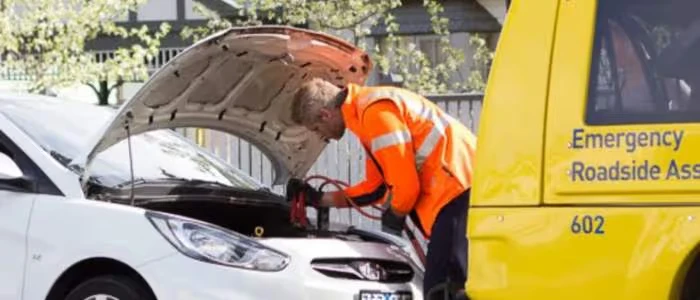
A dead or faulty battery can strike at any time, leaving your car unable to start. In many cases, a jump-start will fix the issue, but when batteries fail completely or repeatedly, emergency car towing becomes the only solution.
Common signs of a failing battery include:
If your car does not start even after attempting a jump, the problem may be deeper, such as a failing alternator or electrical fault. In these cases, 24/7 emergency towing is the safest option. Professional operators can transport your car to a qualified workshop for testing and replacement, avoiding further electrical damage.
Running out of fuel might seem like a rare mistake, but it is surprisingly common, especially on long trips or in regional areas where service stations are scarce. Fuel shortages are an avoidable but frequent cause of emergency towing.
If your fuel gauge hits empty and you are too far from a station, do not attempt to keep driving. It can damage your fuel pump and leave you stranded in a dangerous spot. Pull over safely, switch on your hazard lights, and stay inside your vehicle if traffic is heavy.
Depending on your location, roadside assistance may be able to deliver fuel. If not, a 24 hour emergency towing service can quickly transport your vehicle to the nearest service station or safe location.
When you find yourself in a towing emergency, it is important to stay calm and follow basic safety procedures:
If you are on a major highway or in a remote area, provide clear location details or GPS coordinates when calling for help. This helps 24/7 emergency towing operators find you quickly and dispatch the nearest available truck.
While some roadside incidents are unavoidable, good preparation can reduce your chances of needing a tow. Here are a few preventative steps:
A little preparation goes a long way toward avoiding the stress and cost of emergency towing.

Even with the best preparation, road emergencies can happen when you least expect them. Whether it is a mechanical failure, a flat tyre, or an accident that leaves your vehicle undriveable, professional towing services are there to help you 24 hours a day.
If you ever find yourself stranded, contact us. Our 24/7 emergency towing service operates across Australia, providing safe and reliable assistance whenever and wherever you need it. With a modern fleet and trained operators, we can handle everything from emergency car towing to heavy-duty truck recovery.
Save our number, 134 869, in your phone so you are always prepared for any situation.
When it comes to roadside safety, fast and professional towing support can turn a stressful breakdown into a quick recovery.

Have you broken down or need urgent transportation?
Get in touch via phone or online form to arrange help!
If you believe your vehicle has been towed from a clearway, enter your registration below to check our records.
View our impound page for more info
.webp)


